← Back to portfolio
P-01 · Full-stack concept project
Medical Patient Management System
A complete concept for a healthcare web platform where patients can manage their personal medical information,
view prescriptions and visit history, and request a family doctor. Doctors can review patient records, add visit
reports, prescribe medicines, and manage allergies or chronic conditions. Administrators control doctor accounts
and monitor platform activity.
3
Main roles: Patient, Doctor, and Admin.
14
Core database tables for profiles, visits, diseases, medicines and requests.
UML + ERD
Object-oriented model and relational structure prepared before development.
Responsive UI
Wireframes cover patient pages, doctor workflow, profile editing and prescription tracking.
Project overview
The goal of the platform is to give patients one secure place to see the health information that matters: profile
details, assigned doctor, prescriptions, allergies, chronic problems and recent visits. The same system gives
doctors an efficient dashboard to manage patient records and respond to family doctor requests. The project was
designed from the database level first, then translated into UML and finally into interface wireframes — which
keeps the idea concrete and realistic for a future implementation.
Main user roles
Patient
The patient creates an account and accesses a personal medical dashboard.
- View profile information and contact details
- See allergies and chronic diseases
- Track prescriptions and refill status
- Check visit history and doctor notes
- Request a family doctor from the available list
Doctor
The doctor works with patient records and updates medical information.
- Search and open patient profiles
- Add allergies and chronic conditions
- Create and manage prescriptions
- Add visit reports, diagnosis and notes
- Accept or decline family doctor requests
Admin
The administrator manages the system and doctor accounts.
- Create doctor accounts
- Monitor doctors and patients
- Control account activity status
- Review important platform actions
- Maintain system integrity
Key website features
Patient dashboard
Personal card with age, gender, contact info, family doctor, allergies, chronic problems and recent visits.
Prescription center
Dedicated page with medicine name, dosage, frequency, prescribing doctor and remaining refills.
Doctor workspace
Dashboard to manage patients, review requests, edit records and quickly access patient profiles.
Medical history
Visit records include visit date, reason, diagnosis, notes and certificate text from the doctor.
Database and system architecture
Database design
The database is split into clear entities for patients, doctors, admins, allergies, chronic diseases, medicines, prescriptions, visits, documents, requests and logs.
- Patients can have one family doctor
- One patient can have many allergies and chronic diseases
- One prescription can contain many medicine items
- One visit can include notes and attached documents
OOP / UML logic
The backend model is built with object-oriented classes such as Account, Patient, Doctor, Admin, Prescription, Visit and FamilyDoctorRequest.
- Enums are used for gender, visit type and statuses
- Medicines and diseases stay in database tables, not enums
- Repositories handle SQL access
- Services contain business logic
Why this structure works
The system is scalable, easy to maintain, and much cleaner than storing everything in a few large tables. It also matches the wireframe screens closely.
- Clear role separation
- Simple future expansion
- Better validation and security
- Ready for a real implementation
Embedded architecture board
This live board shows the structured system work, helping explain the idea visually for analysis, presentation and planning.
UML / system planning board
The UML planning maps out the classes, relationships and responsibility of each system object before implementation.
Wireframes and interface flow
The wireframes show how each role interacts with the system. The patient sees clear information cards and history
blocks. The doctor gets action-oriented screens for patient management and record editing. Together, they turn the
database and UML into a realistic user experience.
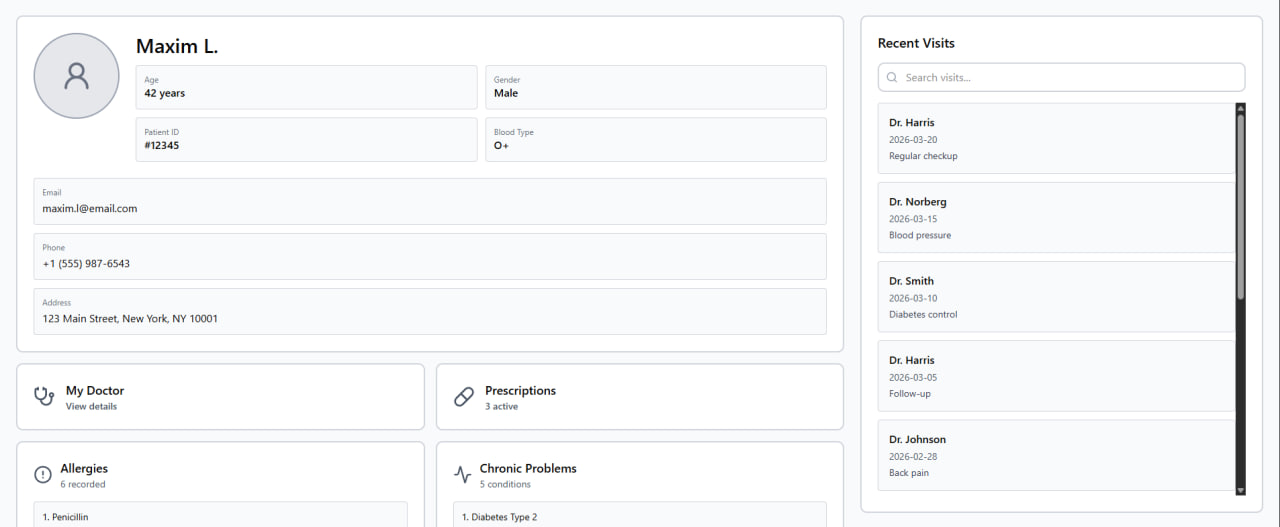
Patient dashboard
Overview page with personal details, assigned doctor, prescriptions, allergies, chronic problems and recent visits.
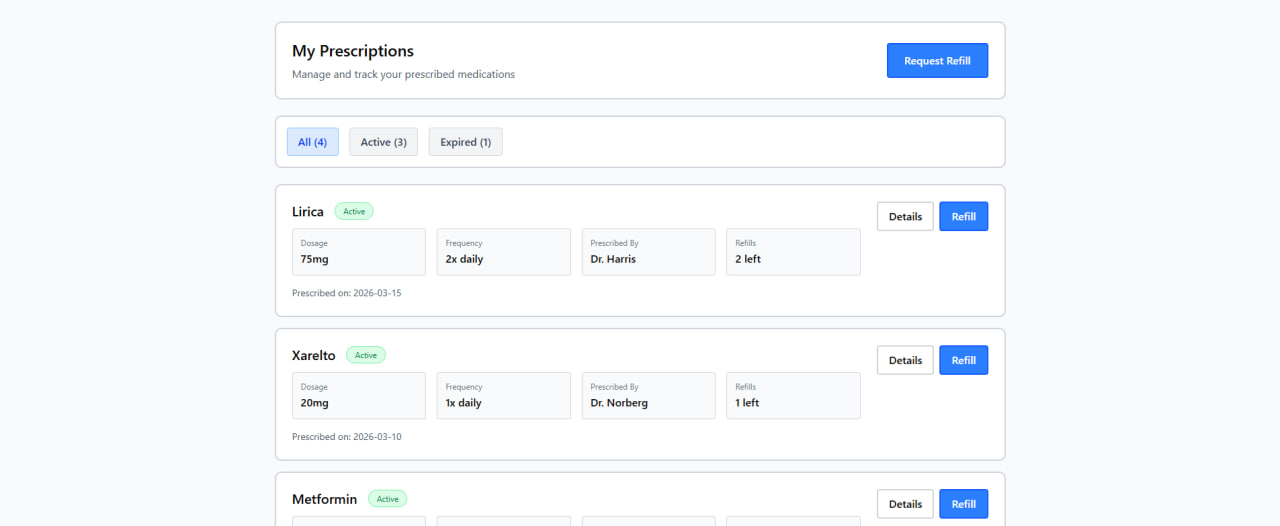
Prescriptions page
Patients can track medicine dosage, frequency, doctor name, issue date and refill availability in one organized page.
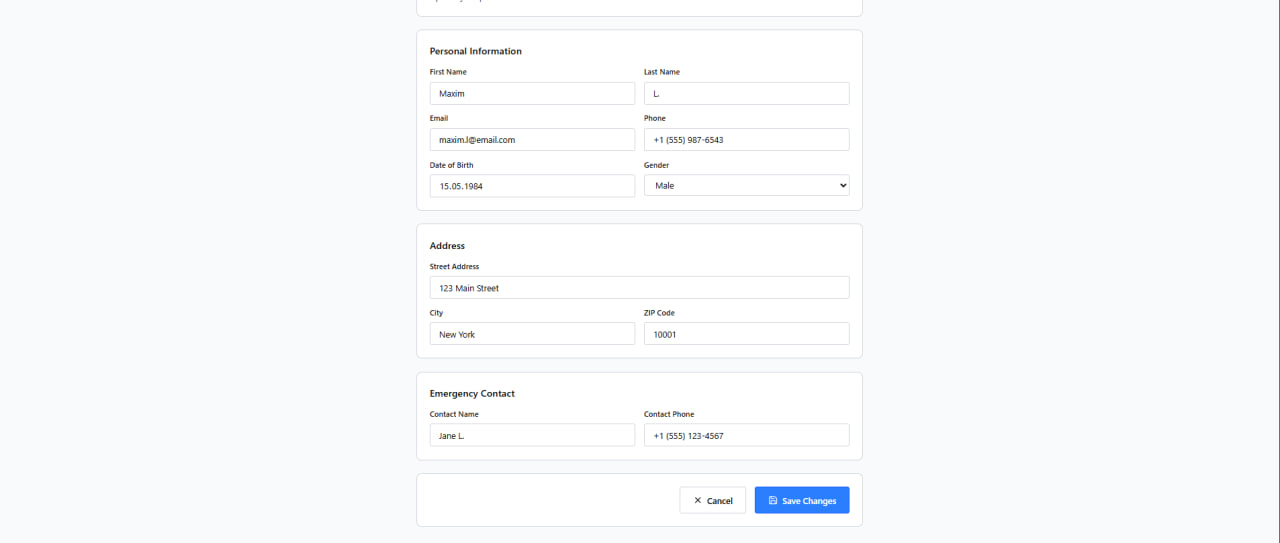
Profile edit
The profile form makes it easy to update contact information, address, emergency contact data and personal details.
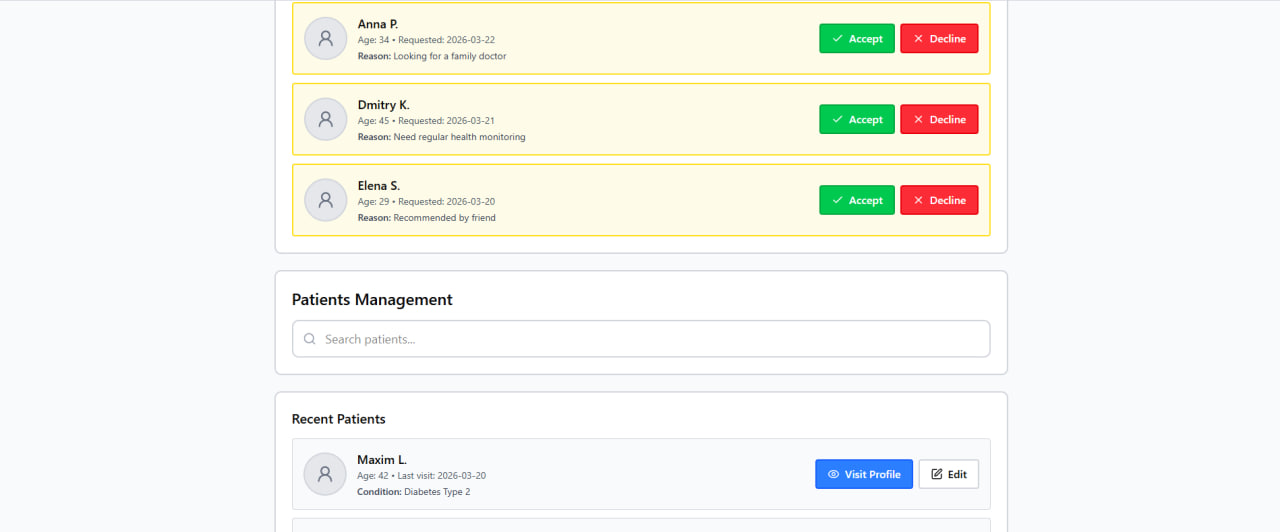
Doctor dashboard
Doctors can review incoming patient requests, search records and open patient profiles for detailed medical management.
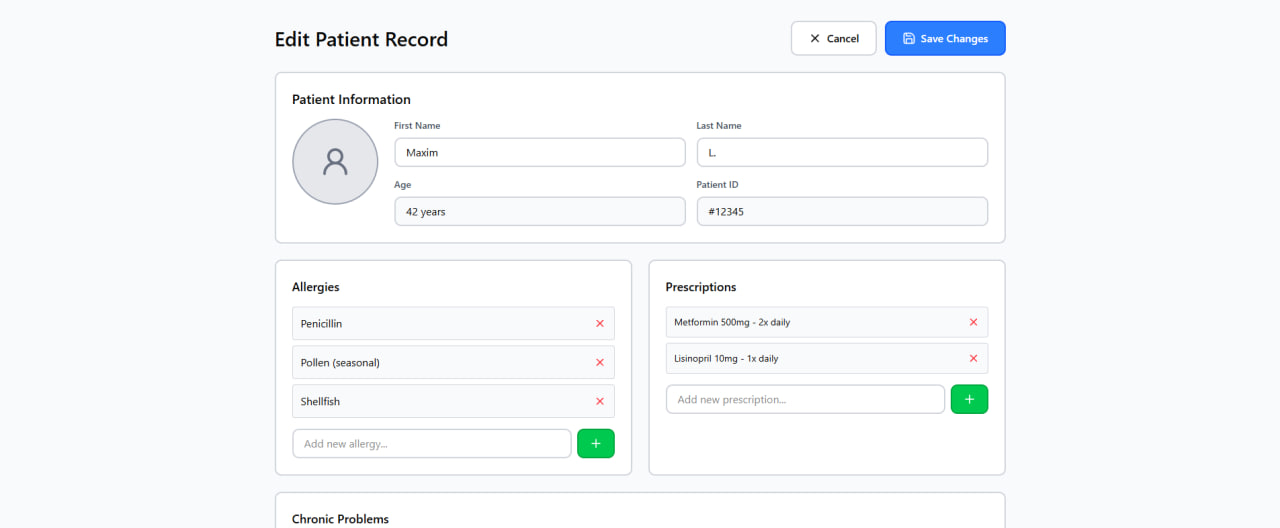
Edit patient record
The top part of the record editor focuses on allergies, prescriptions and key patient information.
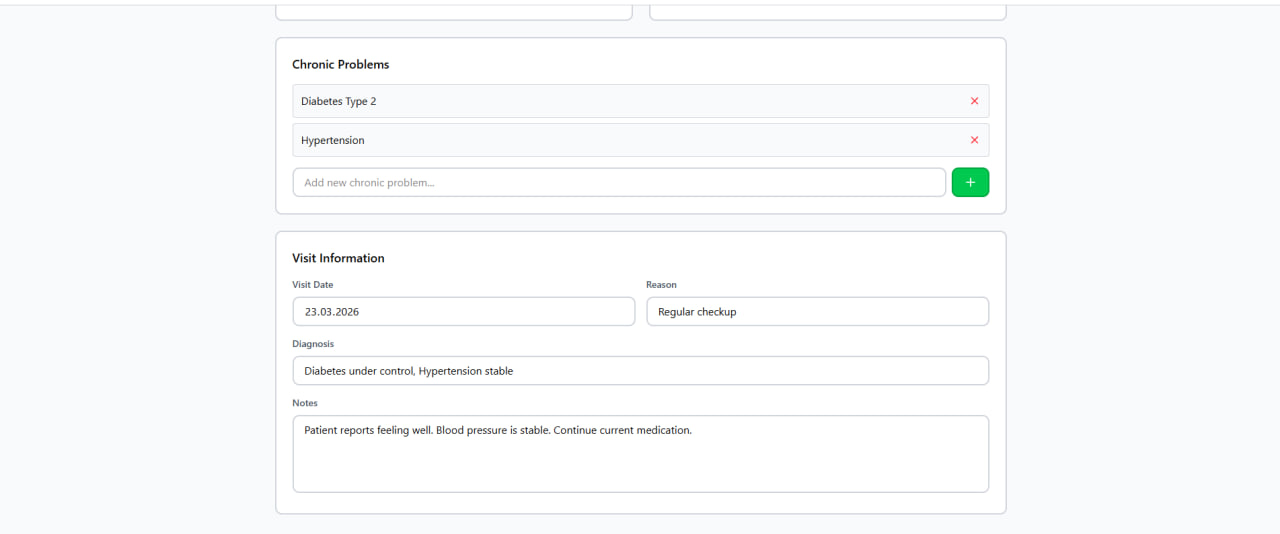
Visit information
The lower section stores visit date, reason, diagnosis and notes, which later become part of the patient history.
Short description
The Medical Patient Management System is a healthcare platform concept designed to connect patients, doctors and
administrators in one organized digital environment. Patients can register, manage personal information, review
prescriptions, view visit reports, check allergies and chronic conditions, and request a family doctor. Doctors
can manage patient records, prescribe medicines, add diagnoses and medical notes, and respond to doctor requests.
Administrators create doctor accounts and oversee the system. The project includes a full ERD, UML logic and
wireframes to show both the technical structure and the user interface. The source code is available on GitHub
for review and future development.